


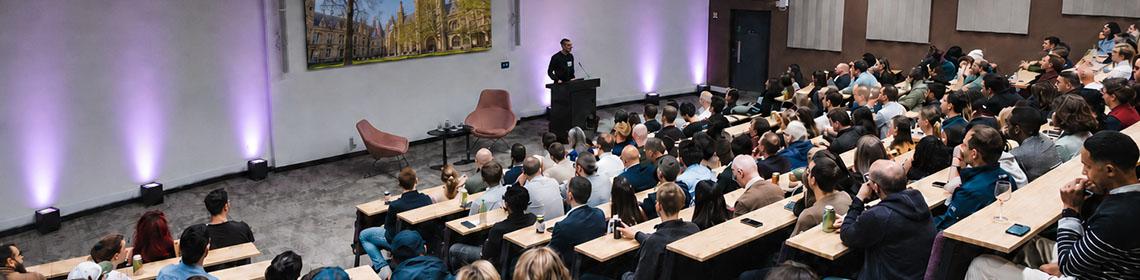
Theme 3: Our people are the Library
An inclusive culture that becomes competitive advantage requires more than values statements.
Culture requires structural change, sustained investment, and willingness to dismantle practices and structures that have 'always worked' because they only worked for some.
Where transformation requires change to roles, that change will principally come through learning, skills development and new ways of working, not restructure by default. We will be explicit and consistent in this commitment. Staff will be supported and permitted to stop lower-value legacy work in order to create capacity for higher-value, future-facing work, and to grow into evolving roles with confidence.
Staff Wellbeing and Development
We commit to protected time for continuous professional development, equitable access to training and reskilling (especially for AI, digital capabilities and broader transformation), clear workload policies that prevent burnout, line management support for career development, hybrid working models that support belonging alongside flexibility, and staff hubs across sites to reduce isolation.
Every member of staff will receive training in AI fundamentals, digital capabilities and their application to library work. We will become fully carbon literate by 2035. These aren't add-ons to workload, they are investments in capability essential for our future.
13. Staff Development, AI and Digital Capabilities Programme
- Manchester 2035 Leap: Digital University
We will ensure that every member of Library staff has the skills, confidence, and protected time to thrive in a transformed professional environment. By 2027, 100% of staff will have completed foundational AI and digital capabilities training tailored to their roles, understanding both the capabilities and limitations of AI tools, emerging technologies and the evolving digital landscape, and their ethical application to library work. We will establish protected CPD time for all staff, with annual development plans that connect individual growth to strategic priorities. We will create clear pathways for reskilling as roles evolve, ensuring that technological change creates opportunity rather than anxiety, and recognising that transformation is principally delivered through learning and new ways of working, not through restructure. Staff will be actively permitted and supported to stop lower-value legacy activity to free time for higher-value work. We will develop internal expertise in emerging technologies through secondments, apprenticeships, partnerships, and dedicated innovation time. Staff development is not a cost to be minimised but an investment that determines whether we can deliver Imagine2035. By 2030, the University Library will be recognised across the sector as a place where library professionals come to develop cutting-edge skills.
Structural Inclusion and Anti-Racism
We commit to examining every system, process, and unwritten rule that advantages some and disadvantages others. This means understanding why staff demographics don't reflect Manchester's diversity, tracking and addressing differential progression rates, ensuring diverse voices shape strategy and demonstrating that joining the Library materially improves career trajectory regardless of background.
The Ahmed Iqbal Ullah RACE Centre is central to this commitment. It provides resources for anti-racist scholarship, education programmes for students and community members, and a national platform for conversations about racism, migration, and social justice. The RACE Centre is not a special collection we house, it is infrastructure for the anti-racism work the entire University must do.
If our inclusion work doesn't fundamentally reshape budget priorities, staffing decisions, and strategic partnerships, it's performative rather than transformative. We will demonstrate structural commitment, not symbolic gestures.
14. Structural Inclusion: From Intention to Infrastructure
- Manchester 2035 Leap: Partner of Choice
We will move beyond diversity statements to structural change that reshapes how the Library operates. We will conduct a comprehensive audit of every system, process, and unwritten rule that may advantage some and disadvantage others, from recruitment and progression to workload allocation and recognition. We will set measurable targets for staff demographics to reflect Manchester's diversity, with transparent reporting on progress. We will track and publish data on differential progression rates by protected characteristics, with action plans where disparities exist. We will ensure that diverse voices shape strategy through genuine power-sharing, not consultation. We will redesign our spaces, services, and communications to be genuinely inclusive by default. We will embed anti-racism training throughout the organisation, going beyond awareness to active practice.
Distributed Leadership Evolution
Our Distributed Leadership Model, where 51% of staff feel they directly influence policy, is a strength we will evolve. We will ensure it supports agility without creating paralysis, enables rapid decision-making without silencing voices, and creates conditions for others to succeed rather than managing performance.
15. One Library Working
- Manchester 2035 Leap: Innovation Powerhouse
One Library is not a structure but a holistic vision: the Library as a single community built on relationships, collaboration, mutual support and a shared sense of belonging, where the boundaries between teams, services and users are intentionally blurred for the benefit of all. We will regularly review both our structures and our ways of working to ensure that the University Library is optimised as a service and as a place of professional opportunity in the 21st century. Where change is needed it will be delivered, principally, through learning, redesigned ways of working, and the active redirection of effort from legacy activity toward higher-value work, not through restructure as a first reflex. During the course of the next five years we will make changes to teams and structures where these are required to support the One Library vision and to release capacity for transformation.
16. Metadata: From Description to Curation
- Manchester 2035 Leap: Digital University
We will execute a strategic evolution in metadata practice that builds on, rather than diminishes, the deep expertise of our metadata team. AI will enable the automated generation of high-quality descriptive metadata for modern collections at scale, reducing the human effort required for routine cataloguing. The professional skill of metadata colleagues, curatorial judgement, contextual knowledge, interpretive expertise, has never been more valuable, and is precisely what is required to address our substantial retrospective backlog in special collections. Our rare books, manuscripts, archives, and unique materials demand exactly the human intervention that AI cannot provide.
This is a redeployment of expertise, not a reduction of investment. We recognise that change of this kind has real professional and emotional weight for the colleagues whose roles are evolving. We will support the metadata team through this transition with development pathways, recognition of their leadership in shaping AI-augmented workflows, and meaningful involvement in decisions about how the work is organised. By 2030, we will have eliminated the most significant backlogs in our collections descriptions while maintaining cataloguing currency for modern acquisitions through AI-augmented workflows. The result will be world-class collections that are genuinely accessible, not just held, and a metadata team whose expertise is unambiguously central to that achievement.