


Message from the Vice-President and Dean
09 Feb 2026
This week, Fiona highlights the launch of NSS 2026, updates on some changes to leadership roles in the Faculty and University, and looks forward to the launch of the Your Voice Matters 2026 colleague engagement survey.
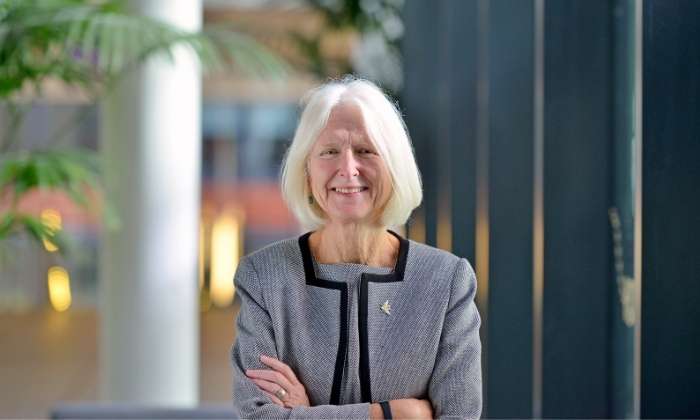
Dear All
We are now into the second week of Semester 2 and I hope that, like me, you are enjoying the new buzz on campus. I am definitely enjoying the longer days. It is not quite dark when I leave the office for home.
National Student Survey 2026
Last week saw the launch of the National Student Survey (NSS) 2026 to our final-year undergraduate students. Over the next three months, they will have the opportunity to give feedback on their experiences of teaching, learning and student life at the University by completing the survey.
The NSS is a crucial way for us to understand what we are doing well and where we need to improve. Colleagues can play an important role in encouraging students to complete the survey, and we know that students respond particularly well to engagement with people they know and interact with regularly.
Class Ceiling and business and biodiversity events make an impact
I was pleased to attend two events recently demonstrating the importance of our work in addressing some of society's pressing issues. Our Chancellor, Nazir Afzal, as Co-Chair hosted the launch at the Whitworth Art Gallery of Class Ceiling, a report into the barriers preventing working class talent from succeeding in the arts sector.
With the chance for Greater Manchester to lead the way, the report makes 21 recommendations to prevent discrimination by class, eliminate systemic barriers and foster inclusivity, where everyone has the prospect to thrive in the arts.
A week ago I spoke at an event at AMBS which brought together researchers, sustainability professionals and industry leaders to explore how organisations can contribute to the restoration of the natural environment. Opened by Vice-President for Social Responsibility, Professor Nalin Thakkar, Business impact: Driving diversity through business action emphasised nature as the foundation to economic activity.
The event was run in partnership with the RSPB, and it was fascinating to hear from speakers and gain insight from a panel discussion, and to explore how the humanities can help interpret scientific evidence and turn it into action on landscape restoration.
Recognition and research awards
Our academics continue to be recognised for their excellence and commitment to their area of practice. Congratulations to Professor of Economics Rachel Griffith, who has become a Fellow of the Royal Economic Society in recognition of her contribution to the discipline. And well done to Professor Emerita in History of Art, Marcia Pointon, who has received an OBE for services to the visual arts.
Recent funding awards for researchers across our Schools include a Leverhulme Research Project Grant of £209,222 for Dr Eloise Moss (SALC) for the ‘Understanding the Limits of Autonomy in Twentieth Century Britain’ project.
Professor James Pattison (SoSS) has received £460,239 as principal investigator for ‘The Ethics of Responding to Rising Global Authoritarianism’ project (with co-investigator Dr Fredrick Hjorthen from the University of Oslo).
Professor Sarah Marie Hall (SEED) has secured a UKRI Future Leadership Fellowship extension for the £996,783 ‘Austerity and Altered Life-Courses: Socio-Political Ruptures to Family, Employment and Housing Biographies Across Europe’ project.
In AMBS, Dr Xian Yang has received £51,401 from the EPSRC Impact Acceleration Account (Industrial Strategy Economic Impact (IS-8) Fund for ‘Securing C++ Software Code via Dynamic Formal Verification — Enhancing real-world impact for Veribee Labs, a University of Manchester spinout company’.
Senior leadership changes and appointments
We have seen several recent changes in academic leadership roles in our Faculty, I would like to pass on my thanks to three outgoing Faculty Associate Deans, who have been appointed to University Associate Vice-President roles. Professor Angie Wilson moves from Associate Dean Internationalisation to Associate Vice-President International.
Associate Dean for Teaching, Learning and Student Experience, Professor Rebecca Hodgson, becomes Associate Vice-President for Curriculum and Quality, and Professor Sarah Dyer leaves her Associate Dean for Teaching and Learning (Flexible and Distance Learning) role to become Associate Vice-President for Teaching Excellence and Innovation.
Thank you to Dr Anke Bernau for her work as Associate Dean for Environmental Sustainability and welcome to Dr Joe Blakey, who has taken up the role. Congratulations also to Professor John McAuliffe of the Centre for New Writing and Creative Manchester, who becomes Associate Vice-President for Culture.
In professional services, Hannah Rundle has been splitting her time between her Executive Director of Faculty Operations role and a leadership position outside the Faculty concentrating on reshaping PS across the institution to help deliver the From Manchester for the world strategy. She is now working on this project full-time until the end of June, with Deputy Executive of Faculty Operations Emma Rose stepping into Hannah’s Faculty role in the meantime.
Your Voice Matters
The second annual Your Voice Matters colleague engagement survey will be launched next month. It provides a valuable opportunity for everyone to reflect on their experience at work and to share openly how engaged they feel. It helps us understand what colleagues most appreciate about being part of the University, as well as where we can continue to improve and create a better environment for all.
Our Faculty and Schools have been acting on the insights shared by colleagues in last year’s survey. In AMBS, colleagues have taken part in sessions on engagement and leadership, focusing on the themes of belonging, line management and communication. SEED has strengthened its approach to career development, particularly around promotions, with targeted training and earlier conversations during the PDR cycle.
SoSS has been working to enhance governance, transparency and inclusivity, with Heads of Department reviewing data and developing local improvement plans, alongside a clearer promotions process. In SALC, EDI Director Professor Steven Pierce and People Partner Christina Collier are now leading work to support wellbeing and culture, and the School is improving engagement through communications and cross-departmental initiatives.
At a cross-Faculty level, PS colleagues have taken practical steps to support staff career development, including a presentation and discussion at a recent Humanities PS open meeting, and an upcoming ‘Applying for roles’ CPD session later this month. We continue to use feedback to drive positive change and I encourage you to spend a few minutes completing the new Your Voice Matters colleague survey when goes live from 10 March.
Time to talk day
It was great to see so many colleagues get involved with national Time to Talk Day last week. It reminds us of the importance of taking time to connect with one another, to listen, and to create space for honest conversations about wellbeing. From mindfulness meditation and sustainability workshops to a Walk and Learn Quest and art competition, each activity helps foster an open, compassionate environment for us to talk openly about mental health.
I am blessed in that I am talking to so many people across Humanities every day! You will be glad to hear I am still taking regular breaks from my desk. I hope you are too, and getting out and about campus. Building on the Starting Well in 2026 campaign, I hope you will continue to think about small actions you can take to support your wellbeing.
Regards Fiona