


Workshop resources
This page brings together slides, recordings, and other supporting materials from past workshops to support ongoing teaching, learning, and scholarship development. Resources are organised into key themes and by academic year of delivery to help you browse areas of interest or revisit materials from specific sessions.
- Assessment and feedback
- Flexible and blended learning
- Inclusive education
- Reward, recognition and professional development
- Scholarship of Teaching and Learning (SoTL)
- Socially responsible curriculum
- Student engagement and Student Voice
- Supporting students
- Teaching approaches
We would like to extend our thanks to all colleagues who have contributed to and delivered these sessions. Their expertise, generosity, and collaboration have made these resources and events possible.
Assessment and feedback
Explore resources from previous workshops focused on assessment and feedback practice in higher education. In these sessions colleagues shared expertise, experience and practical approaches to enhance student learning and support effective, inclusive assessment practices.
2024/25
Enhancing feedback on continuous assessment (led by Dr Mauro Luberti)
- This session focused on improving the quality, consistency, and usefulness of feedback on continuous assessment. It introduced practical tools and workflows, including GTA training approaches, to support effective marking and written feedback that is timely, actionable, and aligned with assessment expectations.
- TEA (Teach, Explore, Apply) blog: Enhancing Feedback on Continuous Assessment
2023/24
Effective feedback for learners (led by Jenni Rose NTF PFHEA and Dr James Brooks PFHEA)
- This session explored different aspects of feedback practice including students writing feedback for themselves (self-feedback) and using AI to help write effective feedback for students.
Designing assessment rubrics in the age of AI: `marking` reflection (led by Dr Valerie Cotronei-Baird, Williams Centre for Learning Advancement (WCLA), the University of Melbourne)
- Dr Valerie Cotronei-Baird, visiting the University of Manchester from the University of Melbourne, shared insights into the (re)development of assessment practices in the context of increasing use of AI in education. The session focused on integrating learner reflection into assessment design and on developing effective rubrics to evaluate reflective work and the development of key human-centred skills such as critical thinking, creativity and teamwork.
ChatNotGPT: Having feedback conversations with colleagues (led by Lisa McDonagh SFHEA and Dr Jen McBride PFHEA)
- This session explored how colleagues give, receive and make use of feedback in teaching and learning contexts. Through discussion, participants considered both formal feedback processes, such as peer observation, and informal, day-to-day feedback between colleagues, examining its purpose, impact and how it is recognised, interpreted and used in professional development contexts including probation, promotion and awards.
Discover the power of student self-feedback to enhance student outcomes (led by Jenni Rose NTF PFHEA, Prof Louise Walker PFHEA, and Dr Jen McBride PFHEA)
- This workshop introduced an evidence-based approach to improving assessment and feedback through inner feedback, drawing on Nicol's (2021) work. Participants explored how AI-supported, reusable assignment resources can help students develop self-feedback, autonomy and self-evaluation skills, and were introduced to a wider network supporting this practice across the University.
Developing student understanding of assessment criteria through peer marking (led by Prof Dan Rigby)
- This session addressed ongoing student dissatisfaction with assessment and feedback by examining an initiative designed to improve first-year students' understanding of marking criteria. Practice focused on engaging students in marking sample essays, using structured feedback frameworks, and requiring active participation prior to attending writing and marking workshops.
MS Teams for collaboration using OneNote Class Notebook (led by Dr Chris Godden and Ushma Khadia)
- This digital capability seminar explored teaching and assessment practices from undergraduate module "Back to the Future: The uses and abuses of history". Led by Dr Chris Godden and Ushma Khadia, the session shared on an innovative assessment using the shortlist.me platform, where students submitted video applications to a ‘Lessons from History research project, and shared insights into its design, delivery and lessons learned.
Using Cadmus in assessments (led by Catherine Murray and Clelia Tundo Cano, Cadmus)
- This session introduced academic and Professional Services colleagues to using Cadmus for assessments, covering assessment setup, class management and marking. Participants were guided through creating and releasing an assessment, managing student submissions and extensions, and using Cadmus reports to support academic integrity, with additional guidance on introducing the platform to students.
- View a demonstration of the Cadmus platform and its capabilities (links to external website - Vimeo; opens in new window)
2022/23
Designing your own cheat-proof multiple-choice exams to improve higher-level thinking skills - workshop 2 (led by Prof David Schultz SFHEA)
- This session examined the limitations of traditional exam questions in science and engineering, particularly in online assessments, and explored approaches to designing questions that promote higher-level thinking while reducing opportunities for academic misconduct. Building on an earlier lecture, participants were guided in developing improved multiple-choice questions that better support learning and assessment at higher levels of Bloom’s taxonomy.
- Recording: How to design cheat-proof multiple-choice exams- workshop 1 (opens in new window - UoM login required)
- ITL Fellowship project report: Designing cheat-proof to improve students higher level thinking (opens in new window)
Active feedback (led by Jenni Rose NTF PFHEA)
- This workshop explored methods for enabling students to generate their own feedback, boosting agency and improving feedback quality. Participants engaged with the research, practiced designing active feedback assignments, and learned tools to apply this approach in their own teaching.
- Active-self feedback - a guide for staff
- ITL Fellowship project report: Active self-feedback
Inclusive feedback (led by Dr Nick Weise PFHEA)
- This session was a chance for colleagues to learn more about inclusive approaches to student-facing activity with a particular focus on provision of feedback. Participants learnt from a mixture of audio-visual presentation and listening to / interrogating the experiences of other attendees allowing them to make an action plan of things to keep doing or change moving forward.
- Institute of Teaching and Learning: Inclusive education resources
Developing student understanding of assessment criteria through peer-marking (led by Prof Dan Rigby)
- This session addressed ongoing student dissatisfaction with assessment and feedback by examining an initiative designed to improve first-year students’ understanding of marking criteria. It focused on engaging students in marking sample essays, using structured feedback frameworks, and requiring active participation prior to attending writing and marking workshops.
2021/22
Active Engagement Assessment (led by Patricia Perlman-Dee CFA, SFHEA)
- This session explored Active Engagement Assessment, an approach where students engage continuously with course content through ongoing smaller and larger assessments, fostering active learning, sustained involvement, and interest in summative assignments.
- Recording: Active Engagement Assessment (opens in new window - UoM login required)
Online assessment at The Open University: Challenges, Opportunities and Changes (led by Dr Victoria Nicholas, The Open University)
- This workshop covered how online assessment works at scale in the STEM faculty and explored how the Open University is tackling issues of academic conduct, equality, digital poverty and inclusion in this area. The workshop covers some of the assessment principles and policy as well as the process used to handle large numbers of online assessments.
Designing effective assessment rubrics (led by Dr Valerie Cotronei-Baird, Williams Centre for Learning Advancement (WCLA), The University of Melbourne)
- This workshop explored the design of assessment rubrics in business education, highlighting how they clarify marking criteria, provide consistent formative feedback, and align assessment of knowledge and skills with learning outcomes.
- Recording: Designing effective assessment rubrics (opens in new window - UoM login required)
Designing effective assessments: practical strategies (led by Dr Valerie Cotronei-Baird, Williams Centre for Learning Advancement (WCLA), The University of Melbourne)
- This workshop presented practical strategies to design effective assessment that align with the learning outcomes for a subject along with examples of a range of assessment designs and strategies.
- Recording: Designing effective assessments: practical strategies (opens in new window - UoM login required)
How to design cheat-proof multiple-choice exams to improve higher-level thinking skills - workshop 1 (led by Prof David Schultz SFHEA)
- The session explored ways to design multiple-choice assessments that promote higher-level thinking, reduce opportunities for cheating, and support colleagues in creating more creative and effective assessment approaches.
- Recording: How to design 'cheat-proof' multiple choice exams to improve higher-level thinking skills (opens in new window - UoM login required)
Connecting assessments with the curriculum (led by Sally Hickson PFHEA)
- This session examined improving assessment alignment with the curriculum to enhance student engagement and meaningful learning, exploring authentic and formative assessment approaches within the framework of constructive alignment.
- Recording: Connecting assessments with the curriculum (opens in new window - UoM login required)
Open Lecture by Dr Edd Pitt (February 2020)
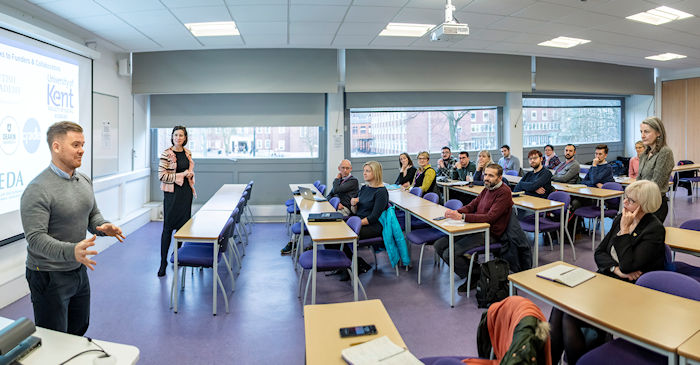
On Monday 10th February we were delighted to welcome Dr. Edd Pitt, Senior Lecturer in Higher Education and Academic Practice at the University of Kent, to deliver our inaugural Open Lecture: 'Tackling the big issues of student satisfaction, transmission and passive recipience of feedback'. Colleagues from across the University attended this excellent and thought-provoking talk, and a recording is available to view online.
Flexible and blended learning
Explore resources from past workshops on flexible and blended learning in higher education, showcasing approaches to designing engaging and accessible learning experiences. These sessions shared practical insights to support flexible and blended approaches to teaching and learning.
2023/24
Generative AI: What’s new and what does it mean for Higher Education? (led by Professor Mairéad Pratschke)
- This talk provided an overview of developments in generative AI and their implications for higher education. It explored integrating GenAI into research and teaching in line with UNESCO guidance and covered emerging tools, the relationship between big tech and higher education, and the role of digital pedagogies in GenAI-informed learning design.
Getting the blend right (led by Dr Alison Fisher SFHEA, Prof Caroline Bowsher PFHEA and Prof Jane Mooney SFHEA)
- This session introduced the University’s approach to Blended Learning following the ‘First Steps to Flexible’ initiative. It presented the ‘Getting the Blend Right’ framework, offering guidance for course unit leaders and programme directors on designing balanced on-campus, synchronous, and asynchronous learning experiences. The session also explored actions to support adoption, share effective practice, and embed blended learning across programmes.
- Resources: Getting the blend right (opens in new window)
Student use of webcams during online sessions: showing and gauging engagement (led by Dr Craig Morley SFHEA (University of Salford) and Ffion Neal, Student Partner)
- This workshop shared findings from the ITL project on student use of webcams in live online teaching. It explored perceptions, practices, and impacts on engagement, offering co-created recommendations on setting expectations, when webcams are needed, strategies to show engagement, and approaches unique to online learning. The session also encouraged discussion and sharing of ongoing practice.
- ITL Fellowship report: Student use of webcams during live synchronous online (opens in new window)
MS Teams as a supportive learning environment (led by Hamza Badenjiki)
- This introductory session for teaching staff explored using Microsoft Teams to enhance student communication, collaboration, engagement, and social learning. It covered experiences from sector showcases, connections to learning theories, pedagogic advantages, best practices for designing Teams spaces, and practical guidance for getting started.
MS Teams for collaboration using OneNote Class Notebook (led by Hamza Badenjik)
- This session for teaching staff explored using Teams OneNote Class Notebook to support formative collaborative and individual student activities. It covered creating and managing notebooks, setting up group and individual tasks, facilitating collaboration, and providing feedback.
MS Teams for collaboration using OneNote Class Notebook - an example (led by Dr Chris Godden and Ushma Khadia)
- This digital capability seminar explored teaching and assessment practices from undergraduate module "Back to the Future: The uses and abuses of history". Led by Dr Chris Godden and Ushma Khadia, the session shared on an innovative assessment using the shortlist.me platform, where students submitted video applications to a ‘Lessons from History research project, and shared insights into its design, delivery and lessons learned.
Embedding the Jisc Discovery tool: Sharing effective practice from across the sector (led by Dr Becki Vickerstaff (HE Senior Consultant) and Prof Jane Mooney SFHEA)
- This digital capability seminar, led by Dr Becki Vickerstaff, focused on embedding the Jisc Discovery tool and sharing sector-wide practice. The session also covered planned updates, including AI-themed question sets, and explored opportunities to support student and staff digital development.
2022/23
Developing academic impact through employer focussed educational programmes (led by Dr Mike Kennard)
- This interactive workshop considered the options available to develop academic impact through executive education. It took a multi-stakeholder approach to discuss the benefits of executive education for academics, institutions and external organisations, as well as some of the common barriers to engaging with executive education and how to overcome them.
- Recording: Developing academic impact through employer focussed educational programmes (opens in new window - UoM login required)
Simulation as a teaching methodology: how to create a safe space (led by Dr Emma Ormerod SFHEA, ITL Fellow)
- This session explored simulation as a teaching methodology focused on creating a safe learning space. Emma presented her triangle model, developed as part of her ITL Fellowship, which integrates thinking, feeling, and doing, drawing on adult learning theories, simulation pedagogy, and psychological safety.
- ITL Fellowship report: Developing an education framework for simulated learning
Embedding digital capabilities in the curriculum (led by Prof Jane Mooney SFHEA, ITL Fellow)
- This masterclass explored embedding digital capabilities for students and staff within higher education. Colleagues shared examples from BSc Public Health, BSc Psychology, and Humanities programmes, highlighting digital assessments, blogging activities, and course design approaches. The session focused on practical strategies to integrate digital skills into curricula and support digital confidence.
- ITL Fellowship report: Supporting digital capabilities
Digital wellbeing (led by Prof Jane Mooney SFHEA and Dr Sarah Shepherd)
- This staff-focused workshop explored what digital wellbeing means, how technology affects it, the impact on wellbeing, and strategies to create priorities that support positive digital wellbeing.
Online practical teaching (led by Dr Maria Canal PFHEA and Ryan Metcalfe)
- This workshop explored transforming practical courses into online or blended formats. It covered the three key steps for developing virtual labs, based on experience with undergraduate practical sessions in the Faculty of Biology, Medicine and Health, and provided an interactive forum for discussion with colleagues across the University.
- ITL Fellowship report: Developing virtual labs
Digital employability showcase: Sharing practice to embed and enhance student digital skills development for employability (hosted by Prof Jane Mooney SFHEA, and panel chairs Amanda Conway and Caroline Everson (Careers Service) with panel members Charlene Gallery (Employability Lead, Fashion Business Technology), Dr Luca Scholz (Lecturer in Digital Humanities), Adam Hugill (The Rise Programme, Manchester Metropolitan University), Dr Doron Cohen (Employability Lead and Programme Director, Psychology)
- This panel session explored how students can recognise and develop digital skills valued in today’s graduate job market. Colleagues shared examples of embedding digital skills into programmes, including web tools, visualisations, blogging assignments, and online platforms, alongside insights from the award-winning Rise Programme. The session included demonstrations, Q&A, and take-home resources for further programme development.
Inclusive education
Explore resources from past workshops on inclusive education in higher education. These sessions cover all aspects of inclusive education across teaching, learning, and student experience and offer practical insights to support equitable, accessible, and diverse learning environments and approaches.
2024/25
Empowering neurodiversity: Challenges and triumphs in Higher Education (led by Janine Dixon SFHEA, ITL Fellow)
- This workshop focused on inclusive teaching, learning, and assessment for neurodivergent students in higher education. Led by a neurodivergent academic, it explored challenges and strengths, challenged stereotypes, and supported participants to identify practical strategies and good practice to reduce barriers, improve accessibility, and foster inclusive learning environments for neurodiverse students and staff.
- ITL Fellowship report: Widening participation in teaching, learning and assessment for neurodivergent students through curriculum design
Fostering student mental well-being as an academic – tips, tools and techniques (led by Dr Elaine Clark SFHEA, ITL Fellow)
- This session supported staff to develop confidence in responding to student mental distress and promote wellbeing within their roles. It explored causes and manifestations of student distress, shared practical tools and strategies aligned with the Advance HE Competency Framework for Responding to Students in Distress (opens in new window), and addressed referral pathways, safeguarding, confidentiality, and self-care for staff.
2023/24
Teaching international students series: Reimagining 'international' students (led by Dr Zhuomin (‘Min’) Huang)
- The first in a three-part series, this session explored the scholarship on teaching international students and intercultural education. During this workshop participants discussed and developed critical and inclusive understandings of international student experience in UK higher education. This session also provided an opportunity for participants to develop a pedagogical network, Creative Approaches to International Students (CAIS).
Teaching international students series: Teaching and supporting international students through creative approaches (led by Dr Zhuomin (‘Min’) Huang)
- The next session in the "Teaching international students" series introduced creative approaches to teaching and learning support and explored applying these approaches in practice.
Teaching international students series: Simulating international students' experience (led by Dr Zhuomin (‘Min’) Huang and Dr Richard Fay, Manchester Institute of Education)
- The final session in the "Teaching international students" series focused on simulating students’ experiences of transitioning into a new academic culture. Through an intercultural training simulation, debrief and discussion, participants reflected on assumptions about academic norms and considered implications for supporting international and other students. The session also connected practice to research in intercultural education and provided opportunities to engage with the Creative Approaches to International Students (CAIS) network.
Identifying and supporting students at risk of underachieving (led by Steven Broom, ITL Fellow)
- This session explored how to identify and support undergraduate students at risk of underachieving or withdrawing. Drawing on an approach developed by the Department of Mathematics, participants examined strategies for early identification and discussed practical ways departments could strengthen student support. Participants were encouraged to reflect on their own contexts and consider actions to implement within their areas.
- ITL Fellowship report: Identifying and supporting students at risk of underperforming
Sustainability Teaching and Learning Listening Events (led by Prof Jennifer O'Brien NTF PFHEA, University Academic Lead for Sustainability Teaching and Learning)
- These informal drop-in events provided staff and students with the opportunity to share their views and experiences and to ask questions about all things related to sustainability in teaching and learning at the University of Manchester. Example topics included exploring what an inclusive and empowering sustainability education should look like in practice, strengths and weaknesses in the University's current agenda sustainability teaching agenda, and needs for professional development in sustainability teaching. Discussions and contributions informed the development of the University’s Sustainability Teaching and Learning strategy and helped connect colleagues with shared interests in sustainability education.
Empowering neurodiversity: Challenges and triumphs in Higher Education (led by Janine Dixon SFHEA, ITL Fellow)
- This workshop focused on inclusive teaching, learning, and assessment for neurodivergent students in higher education. Led by a neurodivergent academic, it explored challenges and strengths, challenged stereotypes, and supported participants to identify practical strategies and good practice to reduce barriers, improve accessibility, and foster inclusive learning environments for neurodiverse students and staff.
- ITL Fellowship report: Widening participation in teaching, learning and assessment for neurodivergent students through curriculum design
2022/23
Inclusive learning environments: honest dialogue and safely challenging discrimination (led by Dr Rebecca Farrington PFHEA, Dr Enam Haque PFHEA and Clare Clarke)
- This session invited colleagues to explore how to make the University more inclusive, providing a safe space to discuss experiences of discrimination and reflect on concepts such as unconscious bias, cultural sensitivity and microaggressions. Participants shared hopes and challenges in addressing inequality and were offered practical guidance on safely challenging discriminatory behaviour. The session supported open dialogue around Equality, Diversity and Inclusion and increased understanding of the experiences of diverse staff and students.
Determining China English, not Chinglish, in students’ academic writing (led by Dr Alex Baratta FHEA and Dr Paul Smith)
- This session presented findings from an analysis of Chinese MA students’ academic writing, including survey and focus group data. It explored features of China English as a systematic variety distinct from standard British English, distinguished it from translation errors or ‘Chinglish’, and considered the implications for marking, feedback, and academic writing practices. The session highlighted that linguistic difference is not deficit and encouraged reflection on how non-standard Englishes outside of standard British English can be recognised and supported in higher education.
- Recommended reading: English, Chinglish or China English? Analysing Chinglish Chinese English and China English by Megan Eaves
Teaching international students series (led by Dr Zhuomin (‘Min’) Huang, Manchester Institute of Education)
- Reimagining 'international' students: The first in a three-part series, this session explored the scholarship on teaching international students and intercultural education. During this workshop participants discussed and developed critical and inclusive understandings of international student experience in UK higher education. This session also provided an opportunity for participants to develop a pedagogical network, Creative Approaches to International Students (CAIS).
- Teaching and supporting international students through creative approaches: The next session in the series introduced creative approaches to teaching and learning support and explored applying these approaches in practice.
- Simulating international students' experience: The final session focused on simulating students’ experiences of transitioning into a new academic culture. Through an intercultural training simulation, debrief and discussion, participants reflected on assumptions about academic norms and considered implications for supporting international and other students. The session also connected practice to research in intercultural education and provided opportunities to engage with the Creative Approaches to International Students (CAIS) network.
2021/22
Class in the Classroom: How our classrooms unintentionally marginalise working-class students, and what we can do about it (led by Dr Leonie Smith FHEA, Lancaster University (previously at Cardiff University))
- This workshop explored how classroom and assessment strategies in higher education can unintentionally favour middle-class behaviours, limiting recognition of working-class students’ strengths. Participants examined key differences in educational strategies, reflected on the epistemic virtues of students from marginalised socioeconomic backgrounds, and considered ways to design teaching and assessment that allow all students’ capabilities to flourish.
Making course units accessible with Universal Design for Learning (led by Dr Wendell Kimper, ITL Fellow)
- This workshop introduced Universal Design for Learning (UDL) as a framework for creating inclusive teaching that minimises physical, cognitive, and organisational barriers. Participants explored UDL’s three principles of multiple means of representation, engagement and expression and discussed practical ways to apply them in teaching delivery and assessment to support meaningful participation for all learners.
2020/21
Across June and July 2021, the Institute of Teaching and Learning in collaboration with the EDI Directorate ran a series of Inclusive Teaching Workshops.
- What does an inclusive university mean to us? Judy Williams, Mehrunnisa Lalani, Emma Smith, Freddie Gent (22/06/21)
- Inclusive Assessment – Gabrielle Finn, Idris Ogunlade, Nana Agyeman (29/06/21)
- Inclusive Curriculum – Susie Miles, Siân Morgan, Mukuma Kawesha, Debbi Ralls (07/07/21)
- Inclusive Teaching Practices – Daniella Ryding, Stephen Doyle, Raska Soemantaro (09/07/21)
- Inclusive Feedback – Nick Weise (12/07/21)
- Creating Inclusive Learning Environments – Holly Morse (13/07/21)
- Towards an Inclusive Education Framework - Judy Williams, Mehrunnisa Lalani, Freddie Gent (15/07/21)
Despite this being a busy period within the University calendar, over 350 staff, students and SU representatives signed up to one or more of the workshops. Each workshop was created in partnership with students and facilitated by colleagues whose own teaching practice has been recognised as a leader in the field of inclusivity.
The workshops offered opportunities for reflection on personal experiences of inclusive teaching and learning and to share best practice among the group. Each workshop was pitched as a standalone theme to offer participants maximum flexibility and choice, but the overlap within inclusive teaching of assessment, curriculum, teaching practice, feedback and environment was very quickly acknowledged by all. This created a useful scaffolding for the final 90-minute workshop in which we discussed an initial draft of the University’s Inclusive Teaching and Learning definition and took the first steps in creating an inclusive education framework and the resources needed to support this.
Following the workshops, a Microsoft Teams space has been set up to continue consultation and collaboration on the development of both the inclusive teaching definition and framework. Recordings of the workshops can be made available for colleagues who were unable to attend.
Monthly reflection and writing sessions
How to Reflect (Led by Professor Hannah Cobb and Holly Dewsnip)
- This session series offered an introduction or refresher on reflection and reflective writing. Participants explored the purpose of reflection, models for structuring reflection and strategies for overcoming difficulties. The sessions provided an informal space for questions and practical support.
Pomodoro Sessions (Led by Holly Dewsnip)
- These monthly writing sessions offered colleagues structured time to work on teaching and learning development. Using the Pomodoro method, each session alternated focused 25‑minute writing blocks with short breaks, providing both dedicated work time and informal check‑ins.
Action on Reflection – An Opportunity to Pause and Reflect (Led by Professor Hannah Cobb and Holly Dewsnip)
- These monthly sessions introduced the purpose of reflection, provided guidance on reflective writing and created a quiet, protected space for participants to engage in reflective practice in a supportive environment.
Annual information sessions: Recognising Teaching Excellence
National Teaching Fellowship Scheme (NTFS) Information Sessions
- This multi‑session programme supported colleagues preparing NTFS applications, offering webinars, guidance on all NTFS criteria and opportunities for networking and reflection as part of the Collaborative Pipeline Programme.
Collaborative Award for Teaching Excellence (CATE) Information Sessions
- This annual multi‑session series supported staff teams interested in CATE applications. Sessions covered key criteria, shared best practice and offered opportunities for collaboration across partner institutions.
Teaching Excellence Awards information session
- The Teaching Excellence Awards Ceremony is held annually to celebrate outstanding contributions to teaching and learning across the University. The event recognises both individual and team achievements, highlighting the transformative impact of award‑winning practice on students, colleagues and the wider learning community. Each year, the ceremony offers an opportunity to showcase the culture of teaching excellence at the University and to acknowledge the work of nominees and winners who contribute to educational enhancement. Feedback from attendees consistently praises the celebratory atmosphere and the value of recognising excellence in teaching.
The full list of award winners can be found here.
Further information: Teaching Excellence Awards
Other
2022/23
Explaining your teaching and learning for reward and recognition (Led by Professor Hannah Cobb NTF PFHEA and Dr James Brooks PFHEA)
- This hands‑on workshop supported participants in structuring clear narratives about their teaching and learning work for promotion or awards. The session introduced a framework for articulating scholarship of teaching and learning through reach, value and impact, and guided participants in shaping these elements into a coherent ‘golden thread’
Build Your confidence in public speaking and presenting (led by Jessica Napthine-Hodgkinson FHEA)
- This interactive workshop used improvisation techniques to build confidence in public speaking, enhance communication skills and improve ease in networking. Participants practised practical exercises to support communication in a range of settings.
2021/22
What CPD can I do in teaching and learning? (led by Professor Judy Williams NTF PFHEA)
- This session explored teaching and learning CPD opportunities, invited colleagues to reflect on impactful development activities and enabled attendees to discuss CPD pathways with the ITL team.
Scholarship in Teaching and Learning (SoTL)
In short, Scholarship of Teaching and Learning (SoTL) is the critical evaluation of teaching and learning with the ultimate aim of enhancing teaching quality and the student experience. SoTL enables educators to take an intentional and evidence-informed approach to teaching and learning and contribute to wider educational knowledge by sharing learning and insight with others.
Annual SoTL series
Launched in 2024/25 and led by Professor Hannah Cobb NTF PFHEA, University Academic Lead for Academic Development (Teaching, Learning and Scholarship), the annual SoTL series supports staff to develop and explore all aspects of SoTL practice - from getting started with SoTL to details about applying for research ethics.
- Book to attend upcoming SoTL series workshops
- Support for your Scholarship of Teaching and Learning (SoTL) at UoM - resources, guidance, networks and events
SoTL series: Introducing Scholarship (delivered by Prof Hannah Cobb NTF PFHEA)
- This session introduced the University of Manchester’s definition of scholarship in teaching and learning, focusing on evidence-based, systematic practice that enhances student outcomes and is shared for critical review. It supported participants at all stages of their scholarship journey to understand what scholarship looks like in their own context and how to begin, develop, evaluate, and disseminate scholarly teaching practice.
SoTL series: Starting your Scholarship (co-delivered by Professor Hannah Cobb NTF PFHEA and Rachel Studd SFHEA, Scholarship Lead, Department of Materials).
- This session supported participants who were new to scholarship in teaching and learning to get started in their own context. It introduced what scholarship is, supported reflection on teaching philosophy and existing practice, and helped participants identify early scholarly contributions and begin articulating a clear teaching and scholarship narrative with peer support.
SoTL series: Scholarship methods (delivered by Professor Hannah Cobb NTF PFHEA)
- This session explored how scholarship in teaching and learning can be put into practice by examining a range of methodological approaches. It supported participants to consider which methods are appropriate for their context and scholarship focus, providing space to reflect on, plan, and select approaches suitable for both new and established scholarly practice.
SoTL series: Sharing your Scholarship (delivered by Professor Hannah Cobb NTF PFHEA)
- This session focused on the dissemination and evaluation of scholarship in teaching and learning, exploring how scholarly work can be shared and adopted by others. It examined different mechanisms for dissemination and evaluation, with particular attention to understanding and evidencing reach, value, and impact.
SoTL series: Telling your Teaching and Scholarship story (delivered by Professor Hannah Cobb NTF PFHEA)
- This workshop supported participants to articulate a clear and coherent teaching and scholarship narrative, often described as a “golden thread.” It focused on identifying teaching philosophy, key contributions to teaching and scholarship, and refining how these are communicated to others, with relevance for applications, awards, and professional development across career stages.
SoTL series: Speed SOTL - Scholarship peer support (delivered by Professor Hannah Cobb NTF PFHEA)
- This highly interactive session supported participants to practise articulating their scholarship through structured peer-to-peer discussion. Using short, rotating conversations, it enabled participants to refine their scholarly narrative, gain feedback, and learn from the work of others, supporting confidence and clarity in communicating scholarship at all stages.
SoTL series: Scholarship ethics (delivered by Professor Hannah Cobb NTF PFHEA)
- This session focused on ethical considerations in scholarship in teaching and learning, supporting participants to reflect on what counts as ethical scholarly practice in their context. It explored how ethics intersects with teaching philosophy, scholarly activity, and dissemination, and supported participants to consider ethical dimensions when developing and articulating their teaching and scholarship narrative.
SoTL series: Evaluating your Scholarship (co-delivered by Professor Hannah Cobb NTF PFHEA and Fran Hooley SFHEA (2024, 2025) / Holly Dewsnip SFHEA (2026))
- This session focused on how to evaluate scholarship in teaching and learning, supporting participants to evidence the difference their scholarly activity makes. It explored ways to identify and articulate impact, value, and contribution, and supported participants to refine their teaching and scholarship narrative through structured reflection and peer discussion.
SoTL series: Meet the Teaching and Scholarship professors (facilitated by Professor Hannah Cobb NTF PFHEA, delivered in partnership with the Teaching and Scholarship Network)
- This session brought together Teaching and Scholarship professors from across the University to share their scholarly journeys and career pathways. It provided participants with insight into how senior colleagues articulate their scholarship, navigate education-focused careers, and offered opportunities for discussion and questions about progression to professorship.
- Panel members (2025): Professor Ang Davies NTF SFHEA, Professor Louise Walker PFHEA, and Professor Ali Owrak
- Panel members (2026): Professor Andrew Mawdsley PFHEA, Professor Sean Bechhofer SFHEA and Professor Patricia Perlman-Dee SFHEA
Teaching and Scholarship Network (TaSN) events
Established in 2024/25, the University's Teaching and Scholarship Network (TaSN) provides a supportive community for colleagues across the University interested in developing their teaching and scholarship practice and who are keen to connect with like-minded colleagues across the University.
Led by Professor Hannah Cobb NTF PFHEA and Jenni Rose NTF PFHEA, the network aims to support staff on Teaching and Scholarship (T&S) contracts to build connections, share experiences and learning, and to develop SoTL across the University. The Network is supported by a steering group with members from across the University community.
TaSN runs several events throughout the academic year which are repeated annually.
Teaching and Scholarship Network meeting with Prof Duncan Ivison (led by Prof Duncan Ivison, President and Vice-Chancellor of the University of Manchester, Jenni Rose NTF PFHEA, and Professor Hannah Cobb NTF PFHEA)
- This annual event provides network members with the opportunity to meet with the University’s President and Vice-Chancellor to discuss key issues, challenges and opportunities faced by Teaching and Scholarship colleagues. It also provided an opportunity to share perspectives, build connections across the network, and contribute insights to the University’s strategic direction from a teaching and scholarship standpoint.
Supercharging your Scholarship (led by Jenni Rose NTF PFHEA)
- During this session participants are supported to clarify and articulate their SoTL and plan realistic, high-impact scholarly activity. Participants were supported to develop their SoTL priorities and actionable plans and encouraged to gain peer feedback and connect with colleagues across the University to maximise impact within available time.
Slow Scholarship (led by Jenni Rose NTF PFHEA)
- TaSN's hugely popular annual Slow Scholarship day provides you with the opportunity to reclaim your focus and deepen your scholarship with a dedicated day of slow academic research. Step away from the demands of teaching and administration to immerse yourself in your intellectual pursuits.
Monthly Scholarship seminars (various facilitators)
- Each month, TaSN welcomes speakers from across the University to share and present their Scholarship, including scholarship that is a work in progress to work that has transformed the sector. Join us to enjoy and learn from our colleagues’ brilliant contributions. Past speakers include Professor Jenn Hallam (Vice-President for Teaching, Learning and Students) and Professor Jackie Carter NTF PFHEA.
SoTL series: Meet the Teaching and Scholarship professors (facilitated by Professor Hannah Cobb NTF PFHEA)
- This session brought together Teaching and Scholarship professors from across the University to share their scholarly journeys and career pathways. It provided participants with insight into how senior colleagues articulate their scholarship, navigate education-focused careers, and offered opportunities for discussion and questions about progression to professorship.
- Panel members (2025): Professor Ang Davies NTF SFHEA, Professor Louise Walker PFHEA, and Professor Ali Owrak
- Panel members (2026): Professor Andrew Mawdsley PFHEA, Professor Sean Bechhofer SFHEA and Professor Patricia Perlman-Dee SFHEA
Pre-2024/25
2022/23
Setting the scene: What is the Scholarship of Teaching & Learning? (led by Dr Miriam Firth PFHEA)
This session introduced the Scholarship of Teaching and Learning (SOTL) through information, activities and discussion. Participants explored and critiqued definitions of SOTL to evaluate its role in Higher Education. It was the first session in a series, followed by Enhancing Learning through SOTL and Explaining your Teaching & Learning for Reward and Recognition.
Enhancing Learning through Scholarship of Teaching and Learning (led by Diane Butler SFHEA)
This workshop explored the significance of SoTL as a systematic, practitioner‑led inquiry into student learning. Participants reflected on its value for students, disciplines, institutions and their own professional practice. The session included discussion of participants’ experiences with scholarly and reflective practice, along with the barriers and enablers to engaging in SoTL. It concluded with a review of support structures used across UK universities, with particular focus on the Open University’s approach.
2021/22
Panel event: Spotlight on Teaching-Focused Careers in Higher Education (Chaired by Professor Hannah Cobb NTF PFHEA)
During this event, invited speakers shared their experiences as Teaching-Focussed academics, their motivations for pursuing a teaching focussed career in Higher Education and their tips and advice for those interested in following a similar path. The event was open to all staff interested in a teaching-focussed career, from GTAs wondering if this might be for them, to current lecturers thinking about going for promotion or even making the switch from teaching and research.
- Panel members (September 2021): Dr Alison Harvey (Science and Engineering), Dr Doron Cohen (Biology, Medicine and Health), and Professor Hannah Cobb (Humanities).
- Panel members (May 2022): Dr Andrew Mawdsley (Biology, Medicine and Health), Dr Cecilia Medupin FHEA (Science and Engineering), and Professor Jennifer O'Brien PFHEA (Humanities)
Participant feedback:
- “That was absolutely fab!”
- “Brilliant panel event and great speakers. I really enjoyed it”
Resources
- Recording: Spotlight on Teaching-Focused Careers in Higher Education, September 2021 (opens in new window - UoM login required)
Socially responsible curriculum
Socially responsible teaching and learning and curriculum. Alignment with 2035 strategy.
2022/23
Designing units for employable and sustainable change-makers through Education for Sustainable Development (led by Kevin Harding SFHEA and Charlene Gallery)
- With the importance of sustainability in today's world, it is essential to empower the next generation of graduates to become employable and sustainable change-makers. This session shared insights and examples of how to embed and integrate ESD (Education for Sustainable Development) principles into academic units and provided collaborative and practical opportunities for staff to create or modify units that promote employability and sustainable change-making.
Sustainability Teaching and Learning Listening Events (led by Prof Jennifer O'Brien NTF PFHEA, University Academic Lead for Sustainability Teaching and Learning)
- These informal drop-in events provided staff and students with the opportunity to share their views and experiences and to ask questions about all things related to sustainability in teaching and learning at the University of Manchester. Example topics included exploring what an inclusive and empowering sustainability education should look like in practice, strengths and weaknesses in the University's current agenda sustainability teaching agenda, and needs for professional development in sustainability teaching. Discussions and contributions informed the development of the University’s Sustainability Teaching and Learning strategy and helped connect colleagues with shared interests in sustainability education.
2021/22
The value of learning - curriculum approaches that benefit the world (chaired by Dr Julian Skyrme FRSA, University Director of Social Responsibility; panel members Prof Jennifer O'Brien NTF PFHEA, University Academic Lead for Sustainability Teaching and Learning, Prof Senathirajah Ariyaratnam NTF PFHEA, Social Responsibility Lead (Dentistry), Dr Philip Drake FHEA Director of the Justice Hub, Director of Social Responsibility (Law), ITL Fellow (Partner-Enabled Learning), Prof Claire McGourlay NTF PFHEA, Director Manchester Innocence Project)
- This panel session explored the multiple benefits of Service Learning for both learners and society. The panel shared their experience of projects that have been making a positive impact in teaching and learning, research, and social responsibility over the last 10+ years and explored how Service Learning could be adopted and adapted by any discipline across the University.
- Recording: The value of learning - curriculum approaches that benefit the world (opens in new window - UoM login required)