


The Legacies of Slavery in Manchester: A Q&A with Kerry Pimblott
19 Feb 2026
Dr Kerry Pimblott received funding from the Humanities Strategic Civic Engagement Fund (HSCEF) in 2024 for her project on the history and legacies of slavery in Manchester.
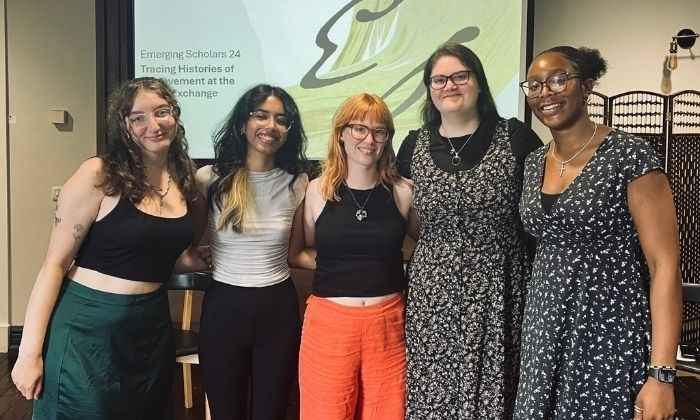
Each year, the HSCEF, the Faculty’s flagship social responsibility fund, provides funding to several projects that aim to improve communities across Greater Manchester. In 2024, Dr Kerry Pimblott, Senior Lecturer in International History, was a recipient of HSCEF funding for her project ‘Reparative Research and the History and Legacies of Slavery in Manchester, UK’. The project aimed to encourage leaders and institutions to better understand the history and legacies of slavery and colonialism across the Manchester city-region through the work of the Emerging Scholars Programme.
We spoke to Kerry to find out more about what inspired the project and the impact it has had.
Can you tell us more about your project and what you hoped to achieve?
The project took as its starting point the increased awareness among civic leaders and institutions of the imperative to better understand, represent, and redress the history and legacies of slavery and colonialism across the city-region.
In recent years, a growing number of Manchester-based civic institutions have embarked on collaborations focused on examining these histories and, in the case of the Scott Trust (owners of The Guardian), delivered a substantive 10-year plan of restorative justice. Such initiatives often require the expertise of trained historians with the ability to provide bespoke and collaborative research support to partnering civic and cultural institutions.
With that in mind, the HSCEF award sponsored the ongoing work of the University’s Emerging Scholars Programme, which has provided this type of support to a range of cultural partners since 2021. Emerging Scholars is a publicly engaged Humanities initiative that brings together diverse teams of student researchers in History and related joint-honours degrees to advance collective understanding of how profits from the transatlantic slavery economy and colonialism funded the social, cultural and economic development of Manchester and the wider city region.
The programme adopts an anti-racist and 'reparatory history’ methodology to conducting this research with the aim of addressing the ‘broken pipeline’ for Global Majority students seeking to progress into careers in the discipline of History and the heritage and cultural sectors. Students partner with major civic institutions to uncover these histories and support the development of a range of public history and engagement interventions.
Research produced by the first two cohorts of Emerging Scholars (2021/22 and 2022/23) led to the creation of the first student-led exhibition at the John Rylands Research Institute and Library (JRRI), Founders and Funders: Slavery and the building of a university. Based on this project, our third cohort (2023/24) was invited to join a multi-year collaboration with the Royal Exchange Theatre (RET) as members of their staff team sought to better understand and represent the history of the building they occupy. While today the Royal Exchange building is home to a theatre company, it was previously the site of a globally significant commodities exchange dealing primarily but not exclusively in cotton and textiles. Support from the HSCEF was used to enable the Emerging Scholars to support the RET staff as they worked to craft new guided building tours, exhibition materials, and web-based resources.
How did your project support the University's social responsibility and civic engagement priorities?
The Emerging Scholars Programme exemplifies the University’s mission to promote social inclusion and create socially responsible graduates by providing a diverse team of postgraduate-taught and advanced undergraduate students with paid opportunities to develop their professional skills and a sense of ethical and social responsibility toward the communities they serve. Through providing structured research mentored opportunities we aim to promote social inclusion in our University and the discipline of History in the UK. Through their research, the Emerging Scholars also play a key role in strengthening the University’s cultural engagement mission through fostering dynamic partnerships and opportunities for knowledge transfer within the city’s cultural institutions.
How was your project enhanced and inspired by our location in Greater Manchester?
The Emerging Scholar Programme focuses specifically on Manchester’s history and students have partnered with several civic institutions across the city as they work to document the city’s relationship to histories of enslavement and colonialism.
What has been the biggest impact that your project has had?
We are proud to have provided collaborative and reparatory history support to an established network of locally based civic and cultural institutions across Manchester. This research has supported the development of original public history, artistic and cultural interventions including new guided tours and web-based content at the RET.
In recognition of this work, the Emerging Scholars and the RET were shortlisted for a Manchester Culture Award in 2025. We also crafted a new exhibition, Local History, Global Impacts: The Manchester Fifth Pan-African Congress at 80, that featured alongside the world premiere of the production, Liberation (Directed by Monique Touko, written by Ntombizodwa Nyoni) at the RET before moving to the Portico Library to mark the official anniversary of the Fifth Pan-African Congress in October 2026. Former scholars have gone on to accept positions in both the heritage sector and public policy while others are pursuing further study in History and related disciplines.
In relation to your project, is there anything planned for the future?
Our collaboration with the RET is ongoing with plans to develop a permanent exhibition. This year, we have also embarked on new partnerships with Manchester Histories and the National Trust’s Quarry Bank Mill site in Styal, Cheshire.
Find out more about the Emerging Scholars Programme.