


Exploring the role of students as researchers: A Q&A with Jen O’Brien
09 Feb 2026
Professor Jen O’Brien received funding from the Humanities Strategic Civic Engagement Fund (HSCEF) in 2024 for her project with Ardwick Climate Action to understand Hums StARs – Students As Researchers – through the lens of our green space on campus.
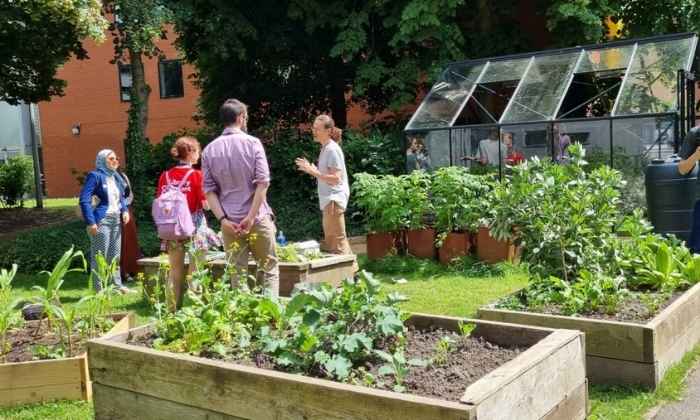
Each year, the HSCEF, the Faculty’s flagship social responsibility fund, provides funding to several projects that aim to improve communities across Greater Manchester. In 2024, Jen O’Brien, Professor of Geography, was a recipient of HSCEF funding for her collaborative project with Ardwick Climate Action, a community group with the mission to protect the local environment. The project aimed to use the community allotment, located behind the University’s Kilburn Building, as a way to explore the role of students as researchers.
We spoke to Jen to find out more about what inspired the project and the impact it has had.
Can you tell us more about your project?
We were looking into the role of Humanities students as researchers, and that’s where Hums StARs came from; students who could undertake research for us and for them while being actively involved in creating knowledge and ideas.
I've always worked in experiential learning and run the University Living Lab, so I was looking at how we could improve the teaching and learning experience for students while enhancing our research agenda at the same time.
This project was for students to see our research agenda and better understand how research and teaching come together, giving them a voice to feed into that agenda and help co-construct it. The lens through which to do that was our green space on campus, specifically our Community Allotment behind the Kilburn Building, enhancing biodiversity at the same time. The allotment work is in partnership with the community of Ardwick, one of our closest neighbours, through Ardwick Climate Action, who have incredible horticultural knowledge. Of course, it now beautifully aligns with the Manchester 2035 agenda around partner-engaged learning.
What did you hope to achieve with your project?
There were short-term and long-term aims. Enhancing biodiversity and better understanding our community partnerships through our green space was a priority. Employing students became a key aim – in the cost-of-living crisis, valuing students' time and input is important. A big finding was that students absolutely want to be involved in research and we had students documenting their experiences, providing lovely feedback about how they appreciated being involved in something real rather than theoretical. It was galvanising how much students really enjoyed it to the benefit of their degrees, especially their dissertations. Zoe, one of our student partners, produced an incredible report which has led to further funding.
Looking more long-term, and perhaps in part as Manchester 2035 has developed as well, we’re looking at the mutually beneficial relationship between research and teaching more significantly, and I've since got a Fellowship with the Institute of Teaching and Learning (ITL) to look into the research-teaching link. This project is an example of how teaching can better inform our research and how that is co-constructed with our students and community partners. It was a real catalyst towards work which is now directly affecting University policy.
How did your project support the University's social responsibility and civic engagement priorities?
It supported the sustainability agenda with our use of green space, particularly from a multi-use perspective and how we can use our spaces to enhance biodiversity, change with students' needs, and be accessible. I’m really proud that we are growing food on campus for our community and our students, learning together in the process.
As an offshoot, pun intended, of this work, we've just received Innovation Lab funding through Sustainable Futures to investigate the role of community gardening in the green skills transition and to try and make that space as accessible as possible to our community partners. It leans into the social responsibility and civic engagement element of our strategy, working better with our neighbours and learning from and with them. For example, our allotment wouldn't work if it wasn't for Margaret, a resident of Ardwick who helps every Thursday. She has said before that it’s the highlight of her week and she loves working with our students.
Working in green space is great for wellbeing. We have had incredible feedback from students and staff about how they love working on the space. Many volunteers are international students who've missed gardening from home.
How was your project enhanced and inspired by our location in Greater Manchester?
We’re a civic University and it’s that real Manchester approach to learning through doing, working in partnership and making more students aware of their capacity to affect change. We are so focused on the idea of students being changemakers when they graduate, but they can make a difference now. The Manchester ethos is a big part of that, in my opinion.
What has been the biggest impact that your project has had?
I think it’s probably the continuing legacy. There are elements of the project that weren’t possible to do within the timeframe, but they have happened since and are ongoing. Also, the allotment itself – we’re a lot more established now.
In relation to your project, is there anything planned for the future?
Yes, the Community Allotment is expanding and becoming a more established Green Classroom. Students will work with us through the Innovation Lab funding to research the role of community gardening in fair sustainability transitions that can scale. We’re working with Nature Neighbourhoods and Good to Grow to connect and scale our work, recognising the benefit of green space to health and wellbeing, in a more resilient, sustainable city.
Through the ITL Fellowship I'm in a better position to use this learning to support teaching and learning policy and it’s been really powerful to use the evidence from this pilot to support this. The experience has taught me to think critically about the public engagement space that we have and how we co-construct those relationships in a genuinely respectful and mutually beneficial way.
Read the project report to find out more.