


End of tenure update from outgoing SEED Director of Postgraduate Research
22 Jan 2026
As she comes to the end of her term as Director of Postgraduate Research for the School of Environment, Education and Development, Professor Tanja Müller reflects on the progress and challenges of the last three years.
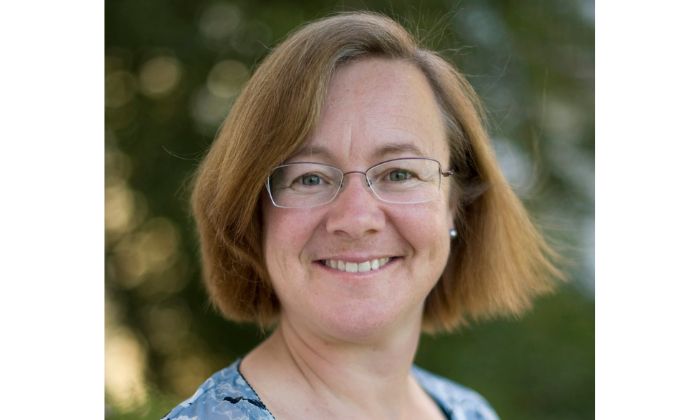
My three-year tenure as SEED Postgraduate Research (PGR) director will end on 31 January 2026. It started as a journey very much into the unknown on 1 February 2023, as the new Doctoral Academy (DA) was just starting to take shape, and we were all finding our feet. But with the competent and enthusiastic support of the whole DA team, my colleagues from other schools, and multiple convivial meetings at Faculty level, I can confidently say the SEED PGR programme is in very good shape as I hand over to my successor.
My role started with a new SEED PGR desk policy of moving towards flexible working spaces for all PGRs. While desk allocation is not within the remit of the PGR director, during my first year I had to manage dissatisfaction with the policy and liaise between PGRs and the School team to make the new policy work.
To help ensure timely completion, I negotiated an agreement to allow fixed desk allocation for year three and above PGRs - a key Faculty objective. In discussions between the SEED School office and PGR reps, specific clusters of flexible desks were established for other cohorts for each discipline to foster community-building. It took time for the new policy to bed in and for frustrations to subside. Since then, the refurbishment of some ALB PGR areas in 2025 has become a shining example of how to successfully revamp flexible study spaces – many thanks to the SEED School Office who applied for funding and worked out the details with the PGR reps.
When I took over the role, my key three-year objective was the strategic growth of an embedded PGR community across SEED research activities. My first action was to recalibrate the process of scholarship allocation so that it both fit with SEED research objectives and was guided by EDI and social responsibility principles.
I made research group membership a key milestone for PGRs on Eprog. This has helped to foster active involvement of all PGRs with research groups and with interdisciplinary research activities beyond the often rather narrow territorial boundaries of the groups.
But group membership itself is not a sign of active involvement, nor does it necessary lead to a sense of belonging to a group. To encourage the latter, I invited all research group leads to present at SEED PGR induction and/or produce a short video of the group and its activities. This was highly appreciated by the three new PGR cohorts of my tenure and proved to be an excellent starting point for sustained engagement with research activities.
In September 2024 I instituted twice-yearly calls for interdisciplinary PGR-led projects that groups of PGRs from different disciplines and RGs could apply to. Over the course of 18 months, ten exciting projects were funded. These have included workshops on interdisciplinary methods, roundtables or discussions with invited guests and an urban film series (now in its second year) as well as well-being activities like ‘brushing away the stress’, interactive painting sessions and walking-based research activities.
Another visible sign of a marked increase in interdisciplinary engagement were the three PGR conferences. These were organised under my guidance by a committee made up of PGRs from all SEED disciplines but also including, for the first time, PGRs from other schools, a format that proved to be very popular.
During the course of my tenure two consistent themes have stood out from PGR feedback when asked about the best parts of their PhD journeys: the freedom to determine one’s own research agenda, and the opportunity to engage with a diverse cohort of students and staff and experience the PhD journey with all its ups and downs as a community.
From 2024 the Faculty of Humanities has implemented new ways to award PhD scholarships. These scholarships are based on supervisor-led-projects, with stipulations about interdisciplinarity of supervisory teams.
I can see a lot of value in a mixed-economy allocation of scholarships, and I hope a proper evaluation of the first cohorts admitted in this way will take place. This approach can provide an innovative way to foster a close cohort of PGRs who work together on interdisciplinary global challenges. But, in the light of the PGR feedback above, I do also hope we keep space for exciting individual projects that potential PGRs bring to us, often based on ideas that supervisors might not have come up with. This would enable us to ensure that postgraduate research within SEED is not only from Manchester for the world, but also from the world for Manchester.
Lastly, there is one important issue that is of great concern to me where, despite my best efforts, I have failed to make desired progress: to cover the cost of often prohibitive visa and NHS surcharge fees for PGRs who are awarded a full SEED (and ideally any UoM) scholarship, particularly for those PGRs from the Global South. To burden PGRs whose excellence has secured them a highly competitive scholarship with costs that for many result in real hardship seems to go against our core values of EDI and social responsibility principles.
Although we were able to get agreement at a School level to cover these costs (by reducing the number of scholarships available so as to remain within budget) unfortunately this is a decision that must be taken at University level, so we have been unable to implement this policy. I do hope the university will soon change its scholarship policy to cover these costs and I know that colleagues in SEED will continue to advocate for this to happen. Removing this major barrier for talented scholarship recipients from poorer backgrounds should be a key part of our University’s commitment to developing future global leaders.