


Assessment and feedback
Assessment and feedback are essential components of the learning journey for all students. Enhancing our assessment and feedback practice is one of the University's key operational and strategic priorities.
The University's Assessment Framework sets out the policies, procedures and guidance that cover the entire assessment journey; the University's Feedback to Students Policy sets out the principles that inform our approach to planning and delivering feedback.
The guidance and resources here have been designed to help you to develop and deliver high-quality assessment and feedback practices.

Assessment Toolkit
For expert advice, policy, and guidance related to assessment and feedback, open to all University staff and students
Contract cheating
Guidance on what contract cheating is and how to combat it
Read more
Active self-feedback
Practical strategies to help you promote student active self-feedback in your teaching
Read more
Online and blended assessment
Key principles, guidance and resources for devising effective and inclusive assessments for online and blended learning
Read more
Exam board chairs and secretaries
Guidance from Teaching and Learning Delivery to support Exam Board Chairs and Secretaries in their role
Read more
Past workshop resources
Explore resources from previous workshops focused on assessment and feedback practice in higher education. In these sessions colleagues shared expertise, experience and practical approaches to enhance student learning and support effective, inclusive assessment practices.
2024/25
Enhancing feedback on continuous assessment (led by Dr Mauro Luberti)
- This session focused on improving the quality, consistency, and usefulness of feedback on continuous assessment. It introduced practical tools and workflows, including GTA training approaches, to support effective marking and written feedback that is timely, actionable, and aligned with assessment expectations.
- TEA (Teach, Explore, Apply) blog: Enhancing Feedback on Continuous Assessment
2023/24
Effective feedback for learners (led by Jenni Rose NTF PFHEA and Dr James Brooks PFHEA)
- This session explored different aspects of feedback practice including students writing feedback for themselves (self-feedback) and using AI to help write effective feedback for students.
Designing assessment rubrics in the age of AI: `marking` reflection (led by Dr Valerie Cotronei-Baird, Williams Centre for Learning Advancement (WCLA), the University of Melbourne)
- Dr Valerie Cotronei-Baird, visiting the University of Manchester from the University of Melbourne, shared insights into the (re)development of assessment practices in the context of increasing use of AI in education. The session focused on integrating learner reflection into assessment design and on developing effective rubrics to evaluate reflective work and the development of key human-centred skills such as critical thinking, creativity and teamwork.
ChatNotGPT: Having feedback conversations with colleagues (led by Lisa McDonagh SFHEA and Dr Jen McBride PFHEA)
- This session explored how colleagues give, receive and make use of feedback in teaching and learning contexts. Through discussion, participants considered both formal feedback processes, such as peer observation, and informal, day-to-day feedback between colleagues, examining its purpose, impact and how it is recognised, interpreted and used in professional development contexts including probation, promotion and awards.
Discover the power of student self-feedback to enhance student outcomes (led by Jenni Rose NTF PFHEA, Prof Louise Walker PFHEA, and Dr Jen McBride PFHEA)
- This workshop introduced an evidence-based approach to improving assessment and feedback through inner feedback, drawing on Nicol's (2021) work. Participants explored how AI-supported, reusable assignment resources can help students develop self-feedback, autonomy and self-evaluation skills, and were introduced to a wider network supporting this practice across the University.
Developing student understanding of assessment criteria through peer marking (led by Prof Dan Rigby)
- This session addressed ongoing student dissatisfaction with assessment and feedback by examining an initiative designed to improve first-year students' understanding of marking criteria. Practice focused on engaging students in marking sample essays, using structured feedback frameworks, and requiring active participation prior to attending writing and marking workshops.
MS Teams for collaboration using OneNote Class Notebook (led by Dr Chris Godden and Ushma Khadia)
- This digital capability seminar explored teaching and assessment practices from undergraduate module "Back to the Future: The uses and abuses of history". Led by Dr Chris Godden and Ushma Khadia, the session shared on an innovative assessment using the shortlist.me platform, where students submitted video applications to a ‘Lessons from History research project, and shared insights into its design, delivery and lessons learned.
Using Cadmus in assessments (led by Catherine Murray and Clelia Tundo Cano, Cadmus)
- This session introduced academic and Professional Services colleagues to using Cadmus for assessments, covering assessment setup, class management and marking. Participants were guided through creating and releasing an assessment, managing student submissions and extensions, and using Cadmus reports to support academic integrity, with additional guidance on introducing the platform to students.
- View a demonstration of the Cadmus platform and its capabilities (links to external website - Vimeo; opens in new window)
2022/23
Designing your own cheat-proof multiple-choice exams to improve higher-level thinking skills - workshop 2 (led by Prof David Schultz SFHEA)
- This session examined the limitations of traditional exam questions in science and engineering, particularly in online assessments, and explored approaches to designing questions that promote higher-level thinking while reducing opportunities for academic misconduct. Building on an earlier lecture, participants were guided in developing improved multiple-choice questions that better support learning and assessment at higher levels of Bloom’s taxonomy.
- Recording: How to design cheat-proof multiple-choice exams- workshop 1 (opens in new window - UoM login required)
- ITL Fellowship project report: Designing cheat-proof to improve students higher level thinking (opens in new window)
Active feedback (led by Jenni Rose NTF PFHEA)
- This workshop explored methods for enabling students to generate their own feedback, boosting agency and improving feedback quality. Participants engaged with the research, practiced designing active feedback assignments, and learned tools to apply this approach in their own teaching.
- Active-self feedback - a guide for staff
- ITL Fellowship project report: Active self-feedback
Inclusive feedback (led by Dr Nick Weise PFHEA)
- This session was a chance for colleagues to learn more about inclusive approaches to student-facing activity with a particular focus on provision of feedback. Participants learnt from a mixture of audio-visual presentation and listening to / interrogating the experiences of other attendees allowing them to make an action plan of things to keep doing or change moving forward.
- Institute of Teaching and Learning: Inclusive education resources
Developing student understanding of assessment criteria through peer-marking (led by Prof Dan Rigby)
- This session addressed ongoing student dissatisfaction with assessment and feedback by examining an initiative designed to improve first-year students’ understanding of marking criteria. It focused on engaging students in marking sample essays, using structured feedback frameworks, and requiring active participation prior to attending writing and marking workshops.
2021/22
Active Engagement Assessment (led by Patricia Perlman-Dee CFA, SFHEA)
- This session explored Active Engagement Assessment, an approach where students engage continuously with course content through ongoing smaller and larger assessments, fostering active learning, sustained involvement, and interest in summative assignments.
- Recording: Active Engagement Assessment (opens in new window - UoM login required)
Online assessment at The Open University: Challenges, Opportunities and Changes (led by Dr Victoria Nicholas, The Open University)
- This workshop covered how online assessment works at scale in the STEM faculty and explored how the Open University is tackling issues of academic conduct, equality, digital poverty and inclusion in this area. The workshop covers some of the assessment principles and policy as well as the process used to handle large numbers of online assessments.
Designing effective assessment rubrics (led by Dr Valerie Cotronei-Baird, Williams Centre for Learning Advancement (WCLA), The University of Melbourne)
- This workshop explored the design of assessment rubrics in business education, highlighting how they clarify marking criteria, provide consistent formative feedback, and align assessment of knowledge and skills with learning outcomes.
- Recording: Designing effective assessment rubrics (opens in new window - UoM login required)
Designing effective assessments: practical strategies (led by Dr Valerie Cotronei-Baird, Williams Centre for Learning Advancement (WCLA), The University of Melbourne)
- This workshop presented practical strategies to design effective assessment that align with the learning outcomes for a subject along with examples of a range of assessment designs and strategies.
- Recording: Designing effective assessments: practical strategies (opens in new window - UoM login required)
How to design cheat-proof multiple-choice exams to improve higher-level thinking skills - workshop 1 (led by Prof David Schultz SFHEA)
- The session explored ways to design multiple-choice assessments that promote higher-level thinking, reduce opportunities for cheating, and support colleagues in creating more creative and effective assessment approaches.
- Recording: How to design 'cheat-proof' multiple choice exams to improve higher-level thinking skills (opens in new window - UoM login required)
Connecting assessments with the curriculum (led by Sally Hickson PFHEA)
- This session examined improving assessment alignment with the curriculum to enhance student engagement and meaningful learning, exploring authentic and formative assessment approaches within the framework of constructive alignment.
- Recording: Connecting assessments with the curriculum (opens in new window - UoM login required)
Open Lecture by Dr Edd Pitt (February 2020)
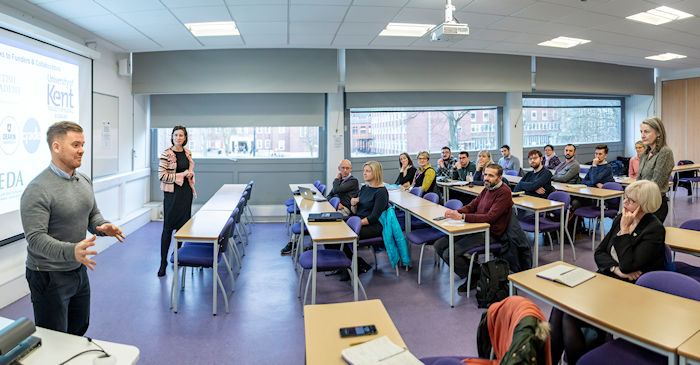
On Monday 10th February we were delighted to welcome Dr. Edd Pitt, Senior Lecturer in Higher Education and Academic Practice at the University of Kent, to deliver our inaugural Open Lecture: 'Tackling the big issues of student satisfaction, transmission and passive recipience of feedback'. Colleagues from across the University attended this excellent and thought-provoking talk, and a recording is available to view online.
Past projects (2014-2025)
Since 2014, the University has supported colleagues to undertake research into different aspects of teaching, learning and the student experience to enhance and share practice across the University.
From 2014-2017, these projects were overseen by the University's Centre for Higher Education Research, Innovation and Learning (CHERIL) which ran a competitive research grant open to University of Manchester staff and enabled colleagues to promote teaching and learning excellence through research.
From 2020-2025, the Institute of Teaching and Learning supported colleagues from across the University, appointed as ITL Fellows via a competitive process, to complete of projects that sought to address particular teaching and learning challenges. These projects were co-delivered with a Student Partner to ensure all outputs were co-designed and co-developed with students. Project outputs have included the development of toolkits and resources, workshops, conference presentations, scholarly publications, and input into institutional decision-making.
Building on these past successes, in September 2026 the Teaching Excellence team opened applications for the University of Manchester Teaching and Learning Discovery Grants. The Teaching and Learning Discovery Grants support colleagues to host discussions between students, academics, professional services staff, and/or people connected to the university which help develop a better understanding of a teaching and learning problem we want to address as an institution.
ITL Fellowship projects (2020-25)
About ITL Fellowship projects
From 2020/21 to 2024/25, the Teaching Excellence team supported colleagues from across the University, appointed as ITL Fellows, to complete a range of projects that explored different areas of teaching and learning practice. All projects were co-delivered with a Student Partner to ensure all outputs were co-designed and co-developed with students.
At the end of each project, ITL Fellow(s) completed an end of project report, sharing learning, resources and their own reflections with a view to supporting others involved in teaching, learning and supporting students. Project outputs have included the development of toolkits and resources, workshops, conference presentations, scholarly publications, and input into institutional decision-making. The following projects explored different aspects of assessment and feedback.
Inclusive assessment: What can we learn from the lived experiences of students?, Jennifer Silverthorne NTF PFHEA
Jenny's project utilised an evidence-based approach to develop a set of indicators of inclusive assessment, that can be applied at either a programme or course unit level. Jenny worked with a range of stakeholders to explore the student voice and develop a culture change intervention to facilitate disclosure and access to assessment support for disabled learners. The aim of this project was to co-create a programme-level strategy in order to embed inclusive assessment into the pharmacy undergraduate degree.
Active self-feedback: empowering students to write their own feedback using comparative judgement and making inner feedback explicit, Jenni Rose NTF PFHEA
Active self-feedback empowers students to write their own feedback using comparative judgement and making inner feedback explicit. I’m working on applying this idea using a variety of comparators, sharing my work through a series of workshops and writing up a journal article to spread the word. Once set up this idea requires minimal teacher input, increases student agency as well as increased satisfaction with feedback.
If you are interested in using active self-feedback in your teaching, please see the guide for staff created by Jenni as part of her ITL fellowship project.
Following the success of Jenni's ITL Fellowship project, Jenni worked with colleagues across the University to test active self-feedback in other disciplines.
- Video: Testing and exploring the use of active self-feedback across UoM (opens in new window, YouTube)
Designing smarter assessments, Prof David Schultz SFHEA
David's project explores aspects of assessments such as design, delivery and supporting effective student engagement, with a focus on creating resources and guidance to support staff in developing inclusive, authentic assessments which are less vulnerable to forms of academic malpractice such as collusion and contract cheating.
- Read Dave's ITL fellowship project report (July 2022)
- StaffNet article about Dave's project (March 2023)
Staff assessment literacy, Sally Hickson PFHEA
Sally's project sought to explore and enhance the assessment literacy of staff across the University with a focus on assessment design in both formative and summative assessment. Shortly after Sally's project began, government lockdowns in response to the outbreak of Covid-19 increased the focus of Sally's project on delivering timely guidance and resources to support staff and students in adjusting assessments.
Developing the interplay between "teacher" and student assessment feedback literacy, Karen Beswick SFHEA
Karen's project explored how assessment feedback could be reimagined as a collaborative, process-oriented practice, positioning students as active partners in generating and applying feedback. It examined approaches to developing both teacher and student feedback literacy, moving beyond traditional models towards shared understanding and responsibility. The work demonstrated how student voice could inform scalable improvements in feedback practices and support learners to engage more confidently and effectively with feedback.
Using reflective practice to build feedback literacy in STEM, Alison Harvey SFHEA
Alison's project sought to co-create a programme with students to develop reflective practice skills as an approach to engaging with feedback and the practicalities of embedding this approach into the curriculum.
CHERIL Grant Award Projects (2014-2017)
The University's former Centre for Higher Education Research, Innovation and Learning (CHERIL) ran a competitive research grant open to University of Manchester staff and enabled colleagues to promote teaching and learning excellence through research and the sharing of best practice, to enhance the student experience by ensuring distinctive graduate attributes and global awareness and to understand and inform sector developments and higher education policy.
- Public engagement and cultural professionals' mentoring in course assessment and feedback by Kostas Avarantis (School of Arts, Languages and Cultures).
Projects:
Cadmus
Cadmus, a secure online assessment platform integrated with our Central Learning Environment (currently Blackboard but transitioning to Canvas), is now available University-wide.
Since the successful roll-out, there has been an increase in the use of Cadmus. To date there have been 111 assessments released to students and overall 156 assessments which represents +39% growth compared to the same period last year.
During Semester 1 2024-25, there has been 21,234 submissions, a significant increase from 2023-24 which saw 7,741 submissions. Overall, for Semester 1, there was a 95.9% positive student experience rating.
Following the successful Bring Your Own Device (BYOD) pilot exam in May 2024 in the Faculty of Biology, Medicine and Health with a 93% student experience score and positive feedback from unit academic staff, the central IT team is planning to trial the LockDown Browser exam functionality of Cadmus.
A student, Level 7 module in Engineering Project Management (Faculty of Science and Engineering) remarked, 'It was a positive experience that improved my confidence in the quality of my work by making the process more integrated and making the guidance more accessible.'
| Outputs to date |
|---|
|
For more information, please visit our Cadmus page or read the full ITL Case Study.
If you are interested in using Cadmus, please request to join our Teams space or email teaching.learning@manchester.ac.uk
Enhancing Assessment Review 1.0
Lead: Jen McBride
The Enhancing Assessment Review (EAR) project began as a small-scale proof-of-concept pilot (EAR 1.0) which ran in the School of Biological Sciences in Spring of 2024. This pilot project took a holistic view of assessment in Semester 1 of Year 2 across two undergraduate programmes – BSc Pharmacology and BSc Zoology – and made recommendations to improve assessments to the programme teams in time for the 2024-25 academic year.
This process resulted in:
- removal of 11 summative assessment points across 4 course units
- removal of 11 summative assessment points across 4 course units
- improved the balance of summative with formative assessment across these units
- reduced summative assessment bunching in Week 12 of the semester
- identified creative and authentic assessments for wider dissemination
- increased the weighting of these creative and authentic assessments to better reflect students’ effort and skills development.
Enhancing Assessment Review 2.0
Lead: Jen McBride
Following the initial EAR pilot (EAR 1.0) and at the request of the School Director of Education, this pilot has been rolled out (EAR 2.0) across Years 2 and 3 of all undergraduate programmes in the School of Biological Sciences. This review ran between September 2024 to February 2025. With engagement from programme directors, unit coordinators, Professional Services colleagues, and input from student reps, the review team considered the assessments for lecture-based units in Years 2 and 3 across 15+ UG Biosciences programmes (65 course units) and made recommendations to enhance those assessments.
Recommendations and changes have been discussed and approved through the usual Quality Assurance processes in the School, and will be implemented and delivered to students from September 2025. We estimate that – overall – the changes made through the EAR process result in around 506 fewer marking hours (or around 68 fewer days of marking, based on a 7.5 hr working day), or around 2,018,320 fewer assessment-words. So far, the changes recommended by the team have been well-received by students, academic staff, and professional services staff.
To reach maximum gains from EAR, the process could be scaled up and rolled out further across the institution, following a framework similar to the EAR 1.0 and 2.0 processes with a small team carrying out the review and making recommendations. This could be embedded as an element of the continuous monitoring or periodic review of programmes processes, and ad-hoc reviews as needed. A small team could be established in each faculty or perhaps centrally to carry out reviews; the original EAR team could provide ongoing training.
| Outputs to date | Outputs anticipated/scheduled |
|---|---|
|
|
Group Work
Lead: Jen McBride
The Group Work Working Group was established in response to a report delivered by the Student's Union (What Matters: Assessment and Feedback Change Project), which identified group work as a source of anxiety and perceived inequity for students and proposed a discontinuation of group work assessments at the University.
Given the importance of group work for students’ development and employability, the GWWG was established to investigate:
- how group work can be enhanced and made to be more effective
- how colleagues can best support students with group work/assessment
- how colleagues can communicate the value of group work to students
Academic and PS colleagues from across all faculties are working to review literature and best practice within and beyond UoM, and develop evidence-informed materialsto support colleagues in the design, delivery and assessment of group work and assessments. The group is developing a searchable Articulate Rise resource and an infographic that can be shared internally and externally. These will also be housed in the Assessment Toolkit and is on schedule to be delivered at the start of the academic year 2025/26.
Working with Cadmus’ product development team, we are developing and piloting a number of solutions to our group work problem statements. Further details of the development plan can be viewed here.
| Outputs anticipated/scheduled |
|---|
|