

What is a community of practice and what do they do?
Put simply, a Community of Practice can be a group of people who share a common concern, interest or passion and learn how to do it better or improve it by interacting regularly; you may well be involved in one already without realising.
Before you start to set one up, check that one doesn’t already exist in the Faculty/University that you could utilise.
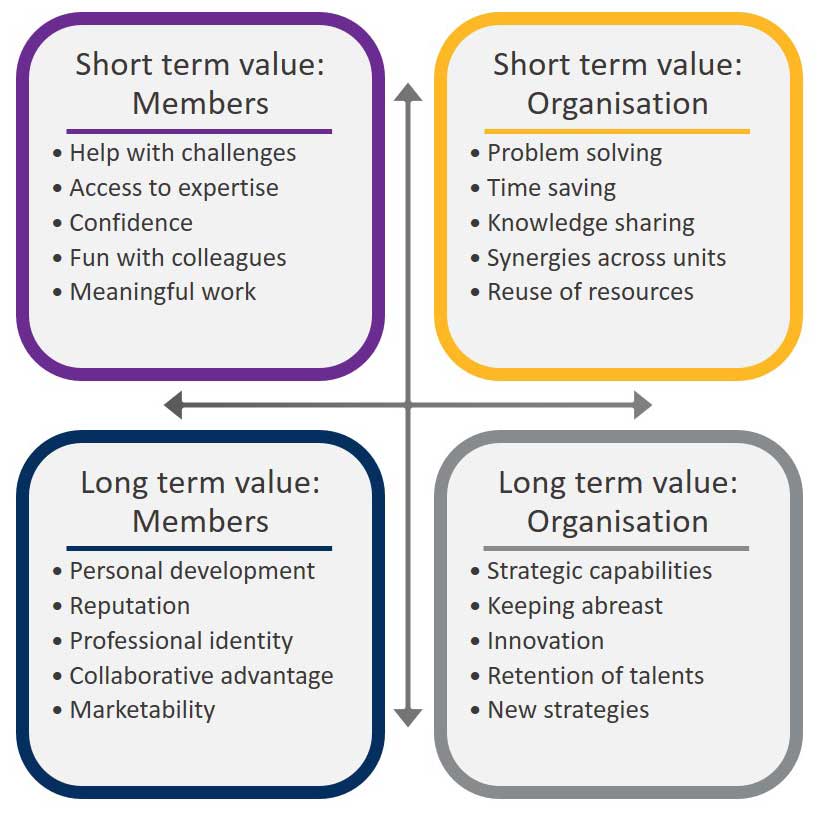
Communities of Practice bring long and short-term benefits to both the members and the organisation.
Short term value for members
In the short term, members gain:
- Help with challenges
- Access to expertise
- Confidence
- Fun with colleagues
- Meaningful work
Long term value for members
In the long term, members gain:
- personal development
- reputation
- a professional identity
- collaborative advantages,
- marketability
Short term value for the organisation
In the short term, the organisation gains:
- Problem solving
- Time saving
- Knowledge sharing
- Synergies across units
- Reuse of resources
Long term value for the organisation
In the long term, the organisation gains:
- Strategic capabilities
- Keeping abreast
- Innovation
- Retention of talent
- New strategies
People use COPs to:
- Solve problems, share best practice, foster innovation and collaboration;
- Provide a forum where members teach and learn from each other irrespective of their position
- Be more connected and share knowledge
- Support each other
- Build trust
- Connections
- Encourages
- Empowers
- Breaks barriers
- Allows you to focus on detail
- Improve processes

Getting started
How to start setting up a Community of Practice

Encouraging participation
Engage and encourage participation